Your Watering Schedule Was Right in July and Is Wrong Now
Quick Answer: From mid-August onward, evaporation drops faster than temperature does. Shorter days, cooler nights and heavier dew mean the same watering schedule now delivers noticeably more water than the plants use. Most late-season root rot and split fruit comes from a July schedule running into September. The fix is to water less often but just as deeply, and to start checking soil at 5cm depth rather than watering by calendar.
The garden looks the same. The thermometer still says summer. And yet the plants are quietly telling you something changed about ten days ago.
Here is what actually shifted, why the calendar stops working, and how to read the soil instead.
What actually changes in the soil in late August?
Four things change at once, and only one of them is temperature — which is why watching the thermometer misleads you.
Day length drops fastest right now. Around the equinox the rate of change in daylight is at its maximum for the year, and by mid-August most northern gardens have already lost more than an hour of daylight since the solstice. Less daylight means less photosynthesis, which means less transpiration — the plant is literally pulling less water through itself per day than it was six weeks ago. That reduction happens regardless of how warm the afternoon feels.
Night temperatures fall before day temperatures do. A garden can still hit 30C at 3pm and drop to 14C at 5am in the same week. Cool nights mean the soil surface stops losing water overnight, and it often gains water from dew. A bed that was bone dry at dawn in July can be visibly damp at dawn in late August after an identical day.
Soil temperature lags air temperature by roughly two to three weeks, and at 15cm depth it lags further. This is the part gardeners consistently get wrong in both directions. In spring, soil is colder than the air suggests; in autumn, soil holds summer warmth long after the air has cooled. Right now your soil is close to its annual peak — which is why late plantings germinate so fast — while the water demand on top of it is falling.
Root systems are at their deepest. A tomato planted in May now has roots well below the top 10cm you have been wetting all summer. Those deeper roots sit in soil that dries far more slowly, and they are drawing from a reservoir your surface watering barely touches. Watering the top 5cm daily at this point in the season keeps the surface wet, encourages shallow rooting, and does very little for the plant.
The combined effect: the same hose, the same minutes, the same three-times-a-week rhythm now supplies substantially more water than the garden is using. The excess does not vanish. It sits in the root zone, displaces air, and starts a specific set of problems.
What does overwatering look like this time of year?
It rarely looks like a drowning plant, which is why it gets missed for weeks.
Yellowing lower leaves are the classic late-season overwatering signal, and they are almost always misread as a nitrogen deficiency. So the gardener feeds, which pushes soft new growth, which needs more water, which makes the problem worse. If lower leaves are yellowing while the soil at 5cm is damp, the answer is less water, not more feed.
Split tomatoes and cracked stone fruit happen when a dry period is followed by a heavy drink — the interior swells faster than the skin can stretch. In late summer this is usually a watering-plus-rain event, where a gardener waters on schedule in the morning and a thunderstorm arrives that evening. Consistency matters more than volume here.
Fungal problems accelerate. Cooler nights plus wet foliage plus long dew periods is the exact condition set for powdery mildew, downy mildew and late blight. In July, foliage wet at 8pm was dry by 10pm. In late August, foliage wet at 8pm is still wet at 7am — an eleven-hour window rather than a two-hour one. This is the single biggest argument for moving watering to early morning and getting water on the soil rather than the leaves.
Root rot in containers shows up as sudden wilting on a plant with wet soil. A wilting plant sitting in damp compost has damaged roots, not thirsty ones, and watering it again is the common fatal move.
Flavour dilutes. Tomatoes, melons and herbs concentrate their sugars and aromatic oils under mild water stress. A well-watered late tomato is a watery tomato. Commercial growers deliberately reduce irrigation in the final ripening weeks for exactly this reason, and it is one of the easiest quality wins available to a home gardener.
Slugs return in force. They largely retreat in high summer and reappear as soon as evenings turn damp. If you have started finding damage overnight after weeks of none, the microclimate around your beds has already changed even if you have not noticed it.
How do you tell whether the soil actually needs water?
By touching it, at the right depth, at the right time of day. It takes about ten seconds and it replaces the entire schedule.
The finger test, done properly. Push a finger in to the second knuckle — roughly 5cm. If soil at that depth feels cool and damp, do not water. If it is dry at 5cm, water deeply. For established plants with deep roots, extend this: a bamboo skewer or a long screwdriver pushed in comes out dark and clinging where soil is moist and clean where it is dry, which gives you a rough profile of how far down the water actually goes.
Check at dawn, not at 4pm. Plants wilt in afternoon heat as a normal protective response even in perfectly moist soil. Afternoon wilting tells you very little. A plant still wilted at 7am has a genuine water problem — or a root problem. This single change in timing prevents more unnecessary watering than anything else.
Weigh your containers. Lift a pot right after watering, then again a few days later. The difference is unmistakable after two or three repetitions, and it is far more reliable than looking at the surface, which dries within an hour and tells you nothing.
Watch the time of day the plant recovers. A garden that perks up by 6pm was never short of water. A garden that stays flat until well after sunset is genuinely stressed.
Moisture meters are worth having if you find the finger test unconvincing, with one caveat: cheap probes read salts as much as water, so they drift in heavily fertilised containers. Use them for relative comparisons between checks, not as absolute numbers.
Keep the depth honest. The most common late-season mistake is checking with a fingertip at 1cm, finding it dry, and watering a bed that is soaking at 8cm. The surface is supposed to be dry in autumn. That is normal and it is not a signal.
What should the new schedule actually be?
Less often, the same depth, earlier in the day. Those three changes cover almost everything.
Cut frequency before you cut volume. If you were watering every other day in July, move to every third or fourth day now and adjust from soil checks. The plants need the same deep reservoir, just refilled less often. Shallow daily watering in autumn is the worst of both worlds — it wets the leaf zone, invites fungus, and never reaches the deep roots.
Water in the morning, ideally before 9am. This gives foliage the whole day to dry, uses the hours when the plant is actually transpiring, and avoids the long damp night that drives late-season disease. Evening watering was defensible in July heat. It is a genuine liability now.
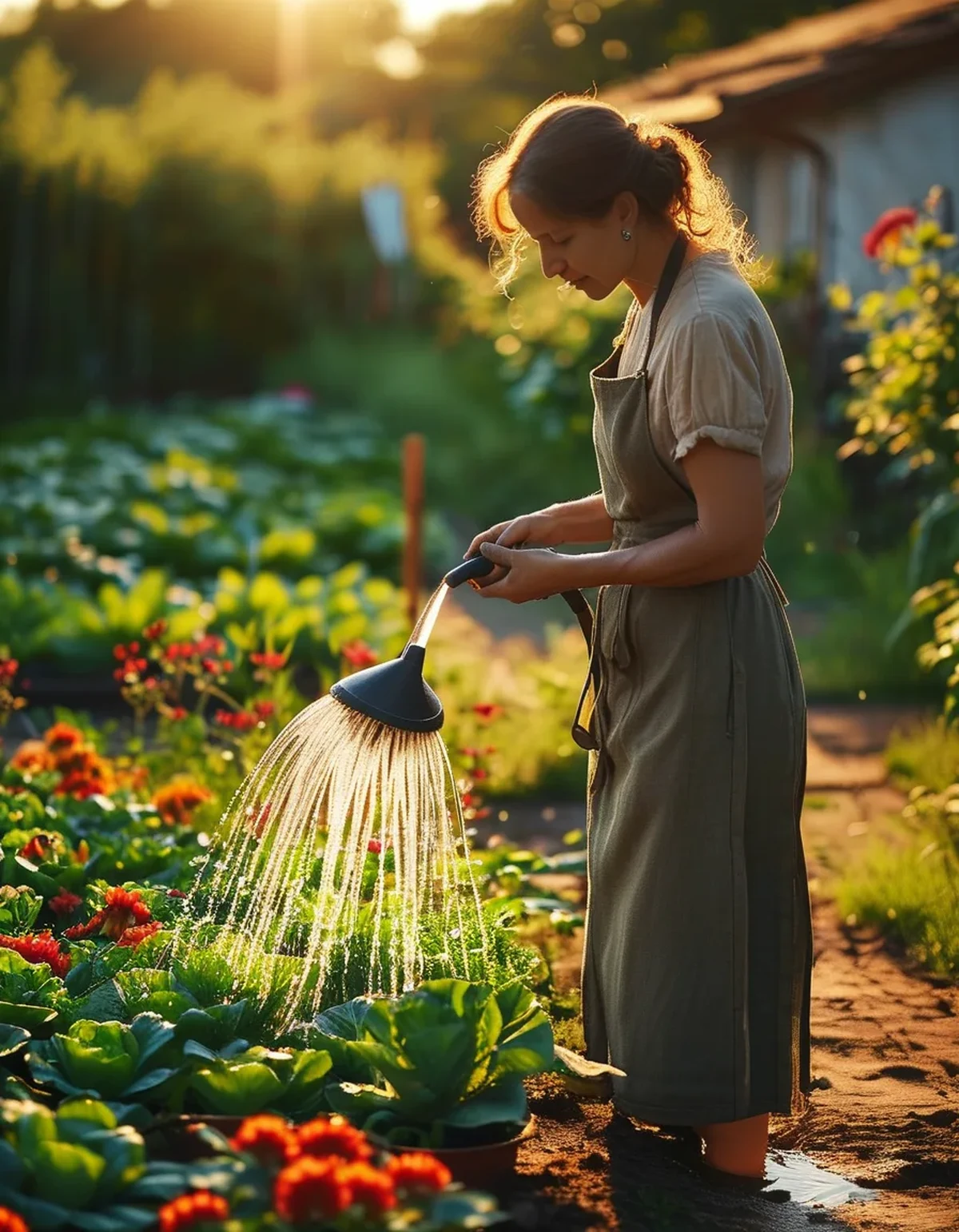
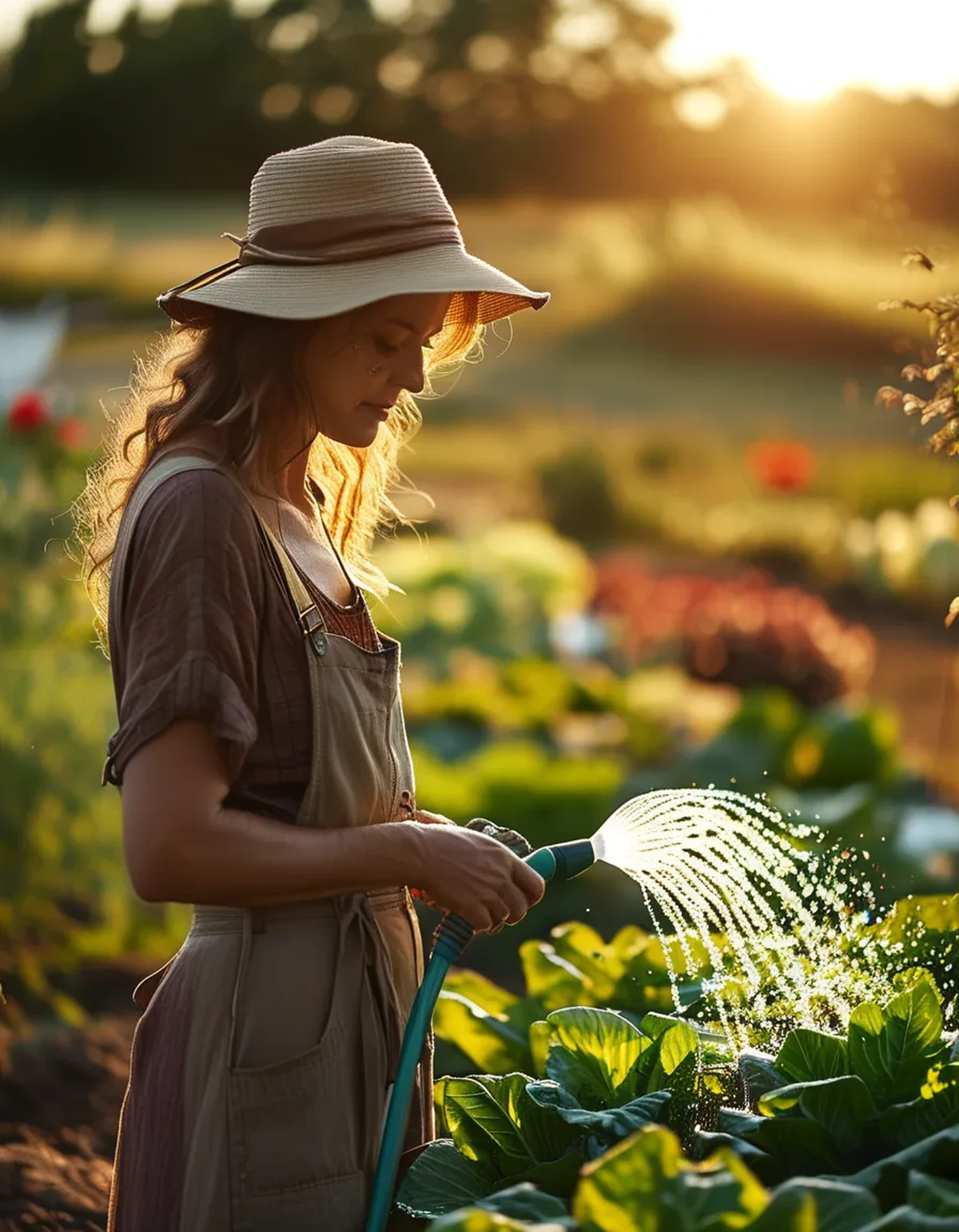
Water the soil, not the plant. A wand held at soil level, a soaker hose or drip line under mulch delivers water where roots are and keeps leaves dry. If you make only one equipment change for autumn, make it this one.
Aim for depth, then stop. A rough working target for beds is around 2.5cm of water per week including rainfall, delivered in one or two sessions rather than five. An empty tuna tin or a straight-sided jar set among the plants tells you exactly how much your hose delivers in ten minutes, which is more useful than any general rule.
Subtract rainfall properly. A light shower that darkens the surface may deliver only 2 or 3mm, which is nothing. A steady overnight rain can deliver 20mm and mean you skip a week. A cheap rain gauge removes the guesswork, and in autumn the guesswork is where overwatering comes from.
Treat containers as a separate system. Pots still dry fast because they have limited volume and exposed sides, and they may need water twice as often as beds even now. But they also stop draining well as temperatures drop, so check the drainage holes are clear before the wet season arrives.
Split the garden by stage. Anything ripening — tomatoes, peppers, melons, winter squash — wants slightly less water for better flavour and less splitting. Anything newly sown for autumn — lettuce, spinach, radish, brassica seedlings — needs consistent surface moisture to germinate in warm soil. These two groups want opposite treatment, and trying to run one schedule over both is why late-season gardens look uneven.
Myth vs Fact: Late-Season Watering
Myth: If it is hot, plants need water. Fact: Water demand tracks daylight and humidity at least as much as temperature. A 28C day in late August with heavy dew and 13 hours of daylight demands substantially less irrigation than a 28C day in June with 15.5 hours of daylight and dry air. Heat alone is a poor predictor this time of year.
Myth: Watering in the sun scorches leaves. Fact: This is a persistent garden myth. Water droplets do not meaningfully focus sunlight onto leaf tissue in normal conditions. Midday watering is inefficient because much of it evaporates before reaching roots, not because it burns anything. The real argument for morning watering is disease, not scorch.
Myth: Wilting means thirsty. Fact: Wilting means the plant is losing water faster than it can move it — which happens in dry soil, but also in hot afternoons with adequate soil moisture, in root-damaged plants sitting in wet soil, and in plants with vascular disease. Check the soil before responding to a wilt. Watering a rotting root system finishes it.
Myth: Mulch keeps soil too wet in autumn. Fact: Mulch mostly buffers. It slows evaporation, moderates the temperature swing between hot afternoons and cold nights, and keeps rain from compacting the surface. In a wet autumn a very thick mulch layer over already-saturated soil can slow drying, so pulling it back slightly from stems is sensible — but removing it entirely trades a small problem for several larger ones.
Myth: Established perennials do not need watering in autumn. Fact: They mostly do not need it in a normal autumn, but going into winter with dry soil is a real risk for shrubs and newly planted perennials. A deep watering before the ground gets cold is genuinely protective, especially for anything planted this year.
Myth: Yellow leaves mean feed it. Fact: In late August, yellowing lower leaves are far more often water-related or simply the plant beginning senescence on schedule. Feeding late in the season pushes soft growth that will not harden off before cold weather, which is actively harmful for perennials and shrubs.
How does this connect to next spring?
More directly than most people expect, because what you do with water now determines soil structure later.
Overwatered soil in autumn compacts. Saturated soil loses its air spaces, and heavy rain landing on bare, wet, structureless soil drives fine particles into the gaps. That is the mechanism behind the hard, slow-draining bed you will meet next April and blame on winter. Keeping soil merely moist rather than saturated through autumn, and covering it, preserves the structure you built all summer.
Roots that stayed shallow all season stay shallow. Frequent light watering trains a root system to live in the top few centimetres, where it is most vulnerable to both drought and freezing. Deep, infrequent watering now sends roots down, and for perennials that pays off directly in winter hardiness.
Wet soil holds pathogens. Fungal spores overwinter in the top layer of soil and in plant debris. A bed that stays waterlogged through autumn goes into winter with a far higher pathogen load than one that dries between waterings, and that shows up as early disease pressure next season.
This is the right window to plant. Warm soil plus reduced evaporation is the best establishment condition of the year for perennials, shrubs, garlic and spring bulbs — better than spring, when soil is cold and demand rises fast. New plantings do need consistent water for the first few weeks, so keep them on a separate, more frequent schedule from your established beds rather than pulling everything back at once.
Get water out of the paths and off the surface. If you have areas that puddle, note them now while you can see it happening. Adding organic matter or raising a bed is far easier to do in autumn than in a wet spring.
Write down the date you changed the schedule. It sounds trivial, and it is the single most useful line in a garden journal. Next year you will know that the shift happens in the third week of August in your garden, and you will make the change three weeks earlier than you did this time.
FAQ: Late-Season Watering Questions, Answered
How do I know if I have already been overwatering?
Dig down 10cm in a bed you have been watering on schedule. If it is dark, cold and slick rather than merely moist, and lower leaves on your plants are yellowing while new growth looks fine, you have been running heavy. Skip two cycles and re-check rather than adjusting gradually.
Should I water at all if rain is forecast?
Check the soil, not the forecast, and if you do water in a week with rain coming, water early in the morning of a dry day rather than the evening before. The stop-start pattern of dry soil followed by heavy rain is what splits fruit.
My containers still dry out every day. Am I doing something wrong?
No. Containers have limited volume and exposed sides, so they behave much more like midsummer than beds do. The autumn adjustment applies far more to in-ground planting than to pots.
Do I need to keep watering things that are finishing?
No, and pulling water back from tomatoes, peppers and squash in their final ripening weeks concentrates flavour and reduces splitting. Just do it gradually rather than stopping dead, which can trigger blossom end rot on late fruit.
When should I do the last deep watering of the year?
For perennials, shrubs and anything planted this season, a thorough soak before the ground gets cold is worth doing — it carries them through a dry, windy winter. For annual vegetable beds it does not matter, because the plants are done.
What if I am away for a week?
Mulch heavily, water deeply the morning you leave, and move containers into shade or group them together. A week in late August is far less risky than a week in July, which is one of the genuine advantages of this time of year.
TL;DR:
- Evaporation and plant demand drop faster than temperature does — the calendar schedule is now delivering surplus water.
- Check soil at 5cm depth at dawn, not at the surface in the afternoon. Afternoon wilting is normal.
- Switch to less frequent, equally deep watering, in the morning, onto the soil rather than the leaves.
- Pull water back from ripening fruit for flavour; keep new autumn sowings on their own frequent schedule.
- Overwatering now damages soil structure that you will meet again next April.
Write down the date you make the switch. Next year it becomes the easiest adjustment in the garden instead of a three-week guess.
Keep Reading
This article is for general informational and styling purposes only. Fit, sizing, and product availability may vary.