The Complete Guide to the Late August Garden Reset
Quick Answer: The late-August reset has four jobs: clear spent summer crops before they drain the soil, sow fast autumn crops while soil is still warm, cut back and feed the perennials that will give a second flush, and stop feeding anything you want to harden off for winter. Soil temperature is still high and day length is falling fast — that combination is what makes this fortnight uniquely productive and easy to miss.
This is the long version, in the order the jobs should actually be done.

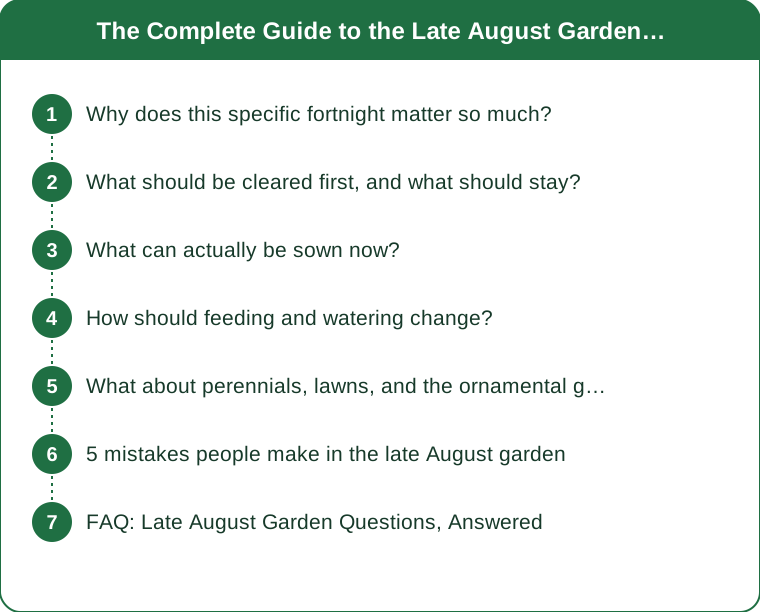
Why does this specific fortnight matter so much?
Soil temperature and air temperature diverge. Soil holds heat far longer than air does. In late August, soil is typically at its warmest point of the entire year — often several degrees above the spring temperature at which everyone sows. Air temperature has started dropping, which reduces heat stress on seedlings.
That combination is close to ideal for germination. Warm soil means fast, even germination; cooler air means less bolting and less water stress. Many crops that struggle when sown in June germinate beautifully in late August.
Day length is the constraint, and it is closing. From late August, most northern-hemisphere gardens lose two to three minutes of daylight per day. Below roughly ten hours of daylight, plant growth slows dramatically regardless of temperature — the point often called the Persephone period, which arrives in early to mid-November for much of the northern US and northern Europe.
This creates a hard deadline. Anything sown now needs to reach near-mature size before growth effectively stops in November. It will hold in the ground through winter and can be harvested, but it will barely grow after that point. Sowing two weeks late is not a two-week delay in harvest; it is often the difference between a crop and no crop.
Summer crops are also actively costing you. A tomato plant with three green fruits and mildew on every leaf is consuming water, nutrients, and space while returning almost nothing, and it is a reservoir for disease that will overwinter. Clearing it is a productive act, not a defeat.
The window is genuinely about a fortnight. By mid-September, soil temperature has dropped enough that germination slows noticeably and the remaining growing days are too few for most autumn sowings to establish.
What should be cleared first, and what should stay?
Clear anything with disease, unconditionally and first. Blighted tomatoes, mildewed courgettes, rusted alliums. These do not compost safely in a domestic heap, which rarely reaches the temperature needed to kill spores. Bin or burn them. Leaving them in place through autumn guarantees you fight the same problem next year.
Clear crops that have stopped producing. Beans that have gone leathery, courgettes producing one fruit a fortnight, cucumbers with yellowing leaves. The plant is spending resources on maintenance and returning nothing.
Leave nitrogen-fixing roots in the ground. Cut beans and peas at soil level rather than pulling them. The root nodules contain nitrogen that releases into the soil as they break down, and it is free fertility for whatever follows.
Keep anything still cropping well. Chard, kale, late beans, and perpetual spinach will often produce into November. There is no virtue in clearing a productive plant to tidy a bed.
Leave seed heads on ornamentals deliberately. Echinacea, rudbeckia, teasel, and grasses feed birds through winter and provide overwintering habitat for beneficial insects. The tidy autumn garden is measurably worse for next year’s pest control.
Do not clear everything at once. Bare soil through autumn and winter loses structure and nutrients to rain, and it is where weeds establish. Clear a bed only when you have something to put in it, or a cover crop ready, or a mulch to cover it with.
And do not dig the beds over. The autumn dig is a tradition rather than a technique. Digging destroys fungal networks and soil structure and brings weed seeds to the surface. Cover instead.
What can actually be sown now?
Fast leafy crops are the core of it. Rocket, mizuna, mustards, pak choi, and cut-and-come-again salad mixes germinate in three to five days in warm soil and give a first cut in four to five weeks. These are the highest-confidence sowings of the season.
Spinach and chard. Spinach germinates poorly in hot soil and beautifully in late-August soil that has cooled slightly from its peak. Sown now, it establishes before winter and produces heavily in early spring.
Radishes, and specifically winter radishes. Standard salad radishes give a crop in four weeks. Daikon and black Spanish radishes sown now size up through autumn and store well.
Turnips and kohlrabi. Both are fast, both prefer cooler growing conditions than midsummer offers, and both are more reliable from a late-August sowing than a June one.
Overwintering onions and garlic — but wait a few weeks. These want to go in from late September through October in most regions. Sown too early they make too much top growth before winter.
Green manures for anything you are not planting. Field beans, winter rye, phacelia, and vetch. They protect soil structure over winter, suppress weeds, and add organic matter when dug in or cut down in spring. This is the single most valuable thing to do with an empty autumn bed.
Hardy annual flowers. Calendula, cornflower, ammi, and larkspur sown now overwinter as small plants and flower six weeks earlier and considerably larger than spring-sown ones.
What not to sow: anything needing a long season. Carrots, parsnips, and brassicas for heading all needed sowing months ago.

How should feeding and watering change?
Stop feeding anything woody. Roses, shrubs, fruit trees, and perennials should get no more nitrogen from now on. Late nitrogen produces soft new growth that will not harden before the first frost, and that growth is what dies back and lets disease in.
Switch to potassium where you are still feeding. Tomatoes, peppers, and anything still fruiting benefit from a high-potassium feed, which supports fruit ripening rather than leaf growth. A tomato feed works for most of them.
Feed autumn sowings lightly and early. New leafy crops want available nitrogen to establish quickly while there is still growing weather. A light feed at three weeks makes a substantial difference to the size they reach before the light fails.
Watering needs change more than people expect. Cooler air and shorter days reduce evaporation, but the soil is still warm and plants are still transpiring. The most common late-August error is stopping watering because it feels autumnal, at exactly the point new sowings need consistent moisture to germinate.
Water new sowings little and often; water established plants deeply and rarely. These are opposite instructions for the same bed and both are correct.
Watch containers particularly closely. Pots dry out fast in late-summer wind even when the temperature is mild, and a container that stayed moist in July may need daily attention in a dry September.
Mulch as beds empty. Three to five centimetres of compost or well-rotted manure on a cleared bed protects the soil surface, feeds the soil life through autumn, and means nothing needs digging in spring. This is the highest-return job of the entire fortnight.
What about perennials, lawns, and the ornamental garden?
Cut back early-flowering perennials for a second flush. Hardy geraniums, catmint, and alchemilla cut back hard now will produce fresh foliage and often a second flowering within four to six weeks. Feed and water after cutting.
Deadhead dahlias and cosmos relentlessly. Both flower until frost if you prevent them setting seed, and both stop within a fortnight if you do not. This is the highest-value ten minutes a week in a late-summer ornamental garden.
Divide overcrowded perennials now, not in spring. Warm soil means roots re-establish before winter, and divided plants perform better the following year than spring-divided ones. Bearded irises, daylilies, and hostas are all good candidates.
Lawns get their most important treatment of the year. Late August through September is when to scarify, aerate, overseed, and apply an autumn feed. Soil is warm enough for grass seed to germinate fast and rainfall is usually improving. An autumn feed is high in potassium and low in nitrogen — the reverse of a spring feed.
Order spring bulbs now and plant them from September. Daffodils go in first, from early September. Tulips wait until November, when colder soil reduces the risk of tulip fire.
Take cuttings while growth is still soft enough. Salvias, penstemons, pelargoniums, and lavender all root readily from cuttings taken now and give you free plants for next year.
Leave the leaves where you can. Fallen leaves on beds are a free mulch and a habitat. Only clear them from lawns, where they smother grass, and from paths, where they become a slip hazard.
5 mistakes people make in the late August garden
1. Tidying too thoroughly. The instinct to clear everything produces bare soil, destroys overwintering habitat for beneficial insects, and removes the seed heads that feed birds. A garden that looks slightly untidy in November is a garden with fewer aphids in May.
2. Sowing too late. The difference between sowing on the 25th of August and the 15th of September is often the entire crop, because of the daylight deadline rather than temperature. If you are going to sow, this week beats next week meaningfully.
3. Continuing to feed with high-nitrogen fertiliser. Soft autumn growth that has not hardened is the primary route by which frost damages shrubs and perennials. Stop the general-purpose feed now.
4. Digging beds over for winter. It destroys soil structure and fungal networks, brings weed seed to the surface, and leaves the soil exposed to winter rain. Mulch on top instead and let the worms do it.
5. Composting diseased material. Domestic compost heaps rarely reach the 60C needed to kill fungal spores and many pathogens. Blight, clubroot, and rust survive the heap comfortably and go straight back onto next year’s beds. The second mistake here is the most consequential in terms of lost harvest, but this one is the one that quietly ruins whole crops the following season.
FAQ: Late August Garden Questions, Answered
Is it too late to sow anything at all if I have missed the window?
No. Fast salad leaves under cover, and green manures, remain worthwhile well into September. Green manure in particular is almost never a wasted sowing.
Should I lift and store my dahlias?
It depends on your climate. In milder areas a thick mulch is sufficient and lifting is optional. In areas with hard prolonged frost, lift after the foliage blackens and store somewhere frost-free and dry.
What is the single most useful job if I only have an afternoon?
Clear the diseased material, then mulch whatever is empty. Between them they prevent next year’s problems and build next year’s fertility, which is more than any amount of sowing will do at this stage.
Do I need to clean and store tools now?
It is a good habit but not urgent. What is urgent is cleaning anything that touched diseased plants — secateurs used on blighted tomatoes will transmit it to the next thing you cut.
TL;DR:
- Late August has the warmest soil of the year and a closing daylight window — sow now, not in a fortnight.
- Clear diseased and unproductive plants first; bin diseased material rather than composting it.
- Sow fast leaves, spinach, radishes, turnips, hardy annuals, and green manure on anything empty.
- Stop nitrogen feeds on anything woody; switch to potassium for fruiting crops.
- Cut back early perennials for a second flush, divide now rather than in spring, and give the lawn its most important treatment of the year.
- Mulch cleared beds instead of digging them, and leave seed heads and leaves where you reasonably can.
The fortnight is short, the soil is at its best, and almost everything you do now pays out between October and next May.
Keep Reading
This article is for general informational and styling purposes only. Fit, sizing, and product availability may vary.