The Small-Space Vegetable Garden: Real Harvests From Balconies and Corners
The vegetable garden dream survives apartment living — balconies, patios and sunny corners grow real food in containers, provided three things are honest: the sun audit, the pot size and the watering rhythm. The small-space guide to harvests that actually happen.
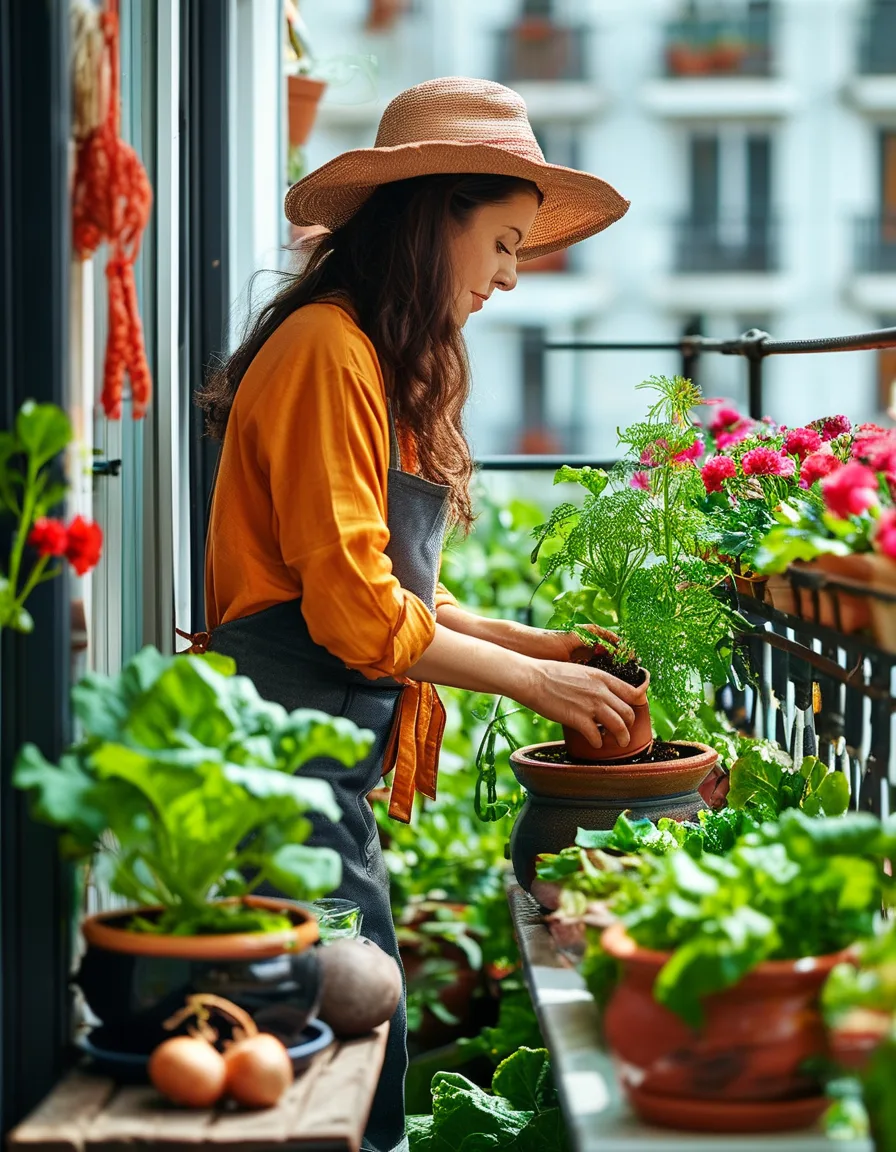
The Sun Audit
The decision that precedes everything: count the actual hours (fruiting vegetables — tomatoes, peppers, cucumbers — want 6-8 hours of direct sun; the balcony that gets four grows a different garden; the honest audit on a sunny day beats the optimistic guess), the four-hour garden (leafy greens, herbs and lettuces thrive at less — the shade-tolerant shortlist that makes north-facing balconies productive anyway), the reflection-and-heat note (balconies bounce heat off walls — the microclimate that extends seasons and dries pots faster; both edges cut), and the movable advantage (containers CHASE sun — the wheeled caddy under the big pot is the small-space gardener’s secret weapon).
The Container-Crop Shortlist
What earns the pot space: the champions (cherry tomatoes in the biggest pot you can host — the highest harvest-per-square-meter crop in container culture; bush and patio varieties bred for exactly this), the reliable tier (peppers and chilies — heat-loving balcony stars; salad greens in wide shallow troughs — the cut-and-come-again harvest that regrows for weeks; and the herb economy — the market-price argument alone justifies basil, mint-in-its-own-pot and rosemary), the vertical wing (climbing beans and cucumbers up a trellis — the square-footage cheat that grows UP), and the skip-list honesty (the space-hungry crops — squash sprawl, corn, potatoes-in-quantity — are ground-garden dreams; the container garden wins by choosing container winners).
The Pot-and-Soil Physics
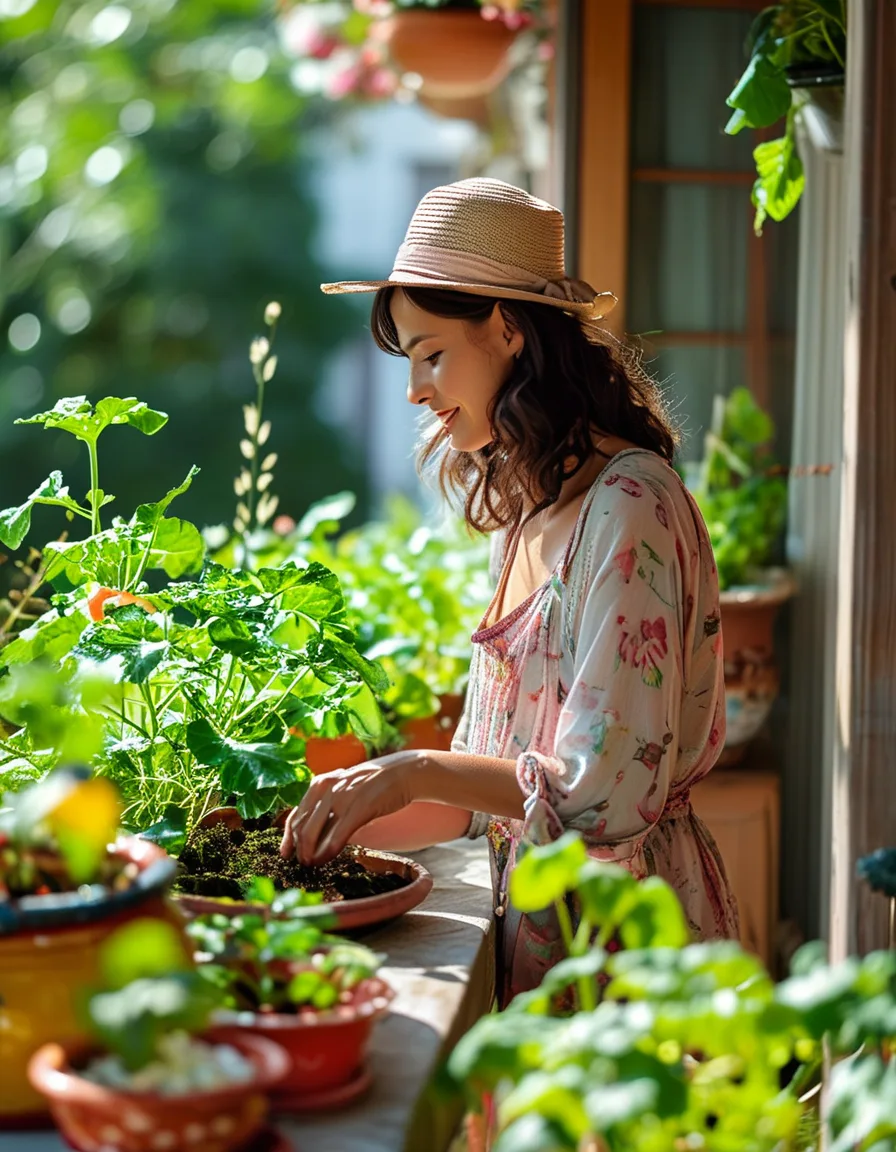
The setup that survives: bigger pots, always (the number-one container error is small pots — they dry in hours and starve roots; tomatoes want 40+ liters, and everything does better one size up), the drainage law (holes plus a free-draining potting mix — never garden soil in containers; the waterlogged pot is the drowning garden), the feeding rhythm (containers leach nutrients with every watering — the fortnightly liquid feed once fruiting starts; the pot garden is a hydroponics-adjacent system that eats regularly), and the mulch trick (the straw-or-bark top layer that halves evaporation — the vacation insurance that costs pennies).
The Watering Rhythm
The habit that decides everything: the finger test over the schedule (a knuckle deep — dry means water; the calendar waters wrong in both directions), the deep-soak doctrine (water until it runs from the drainage holes — the surface sprinkle grows surface roots that die in the first heatwave), the summer honesty (peak-season containers often want DAILY water — the morning-watering habit stacked onto the morning-light protocol; two rituals, one balcony), the self-watering assists (the reservoir pots and drip-spike tier for travel weeks — the garden that survives your vacation), and the payoff framing (the balcony tomato eaten warm off the plant is the entire argument — the small-space garden’s harvest is modest in kilos and enormous in satisfaction; the gardening-for-health chapter’s benefits at container scale). Sun counted, pots sized, water deep: the balcony feeds.
Audit the sun hours, biggest pots possible, water deep by the finger test, feed the fruiters fortnightly. Small-space gardens grow real food — the honesty about sun and pot size is the whole trick.
Keep Reading
This article is for general informational and styling purposes only. Fit, sizing, and product availability may vary.