The Complete Guide to Why Garden Soil Stops Absorbing Water — and How to Actually Fix It
Quick Answer: Soil that stops absorbing water is usually suffering from one or more of a few specific, diagnosable problems — compaction, hydrophobic organic buildup, crusting, or excessive clay content — and each has a distinct fix, so identifying which one is happening in a specific bed matters more than applying a generic “add compost” solution.
Water pooling and running off instead of soaking in feels like a mysterious problem, but it almost always traces back to one of a small, well-understood set of soil conditions.
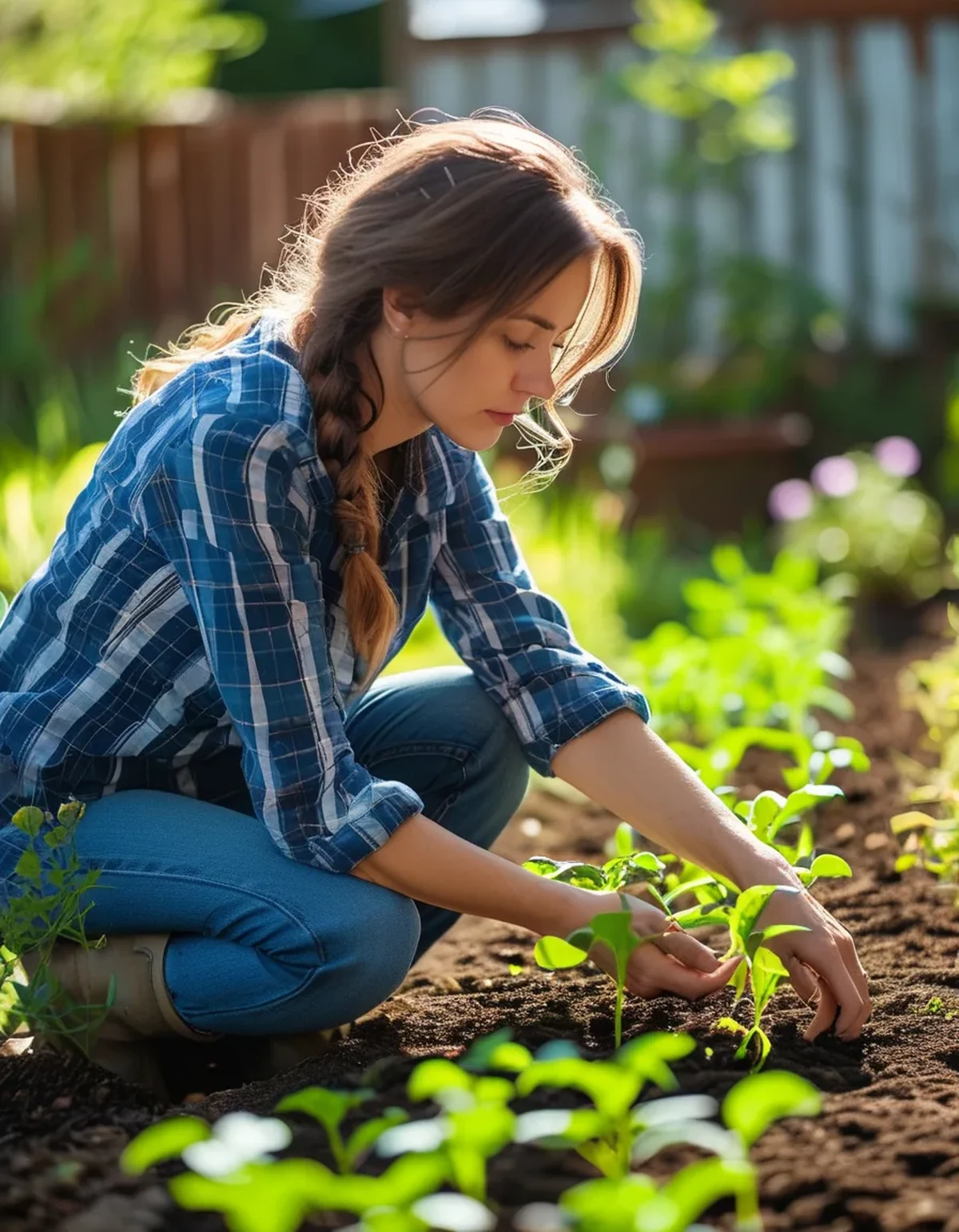
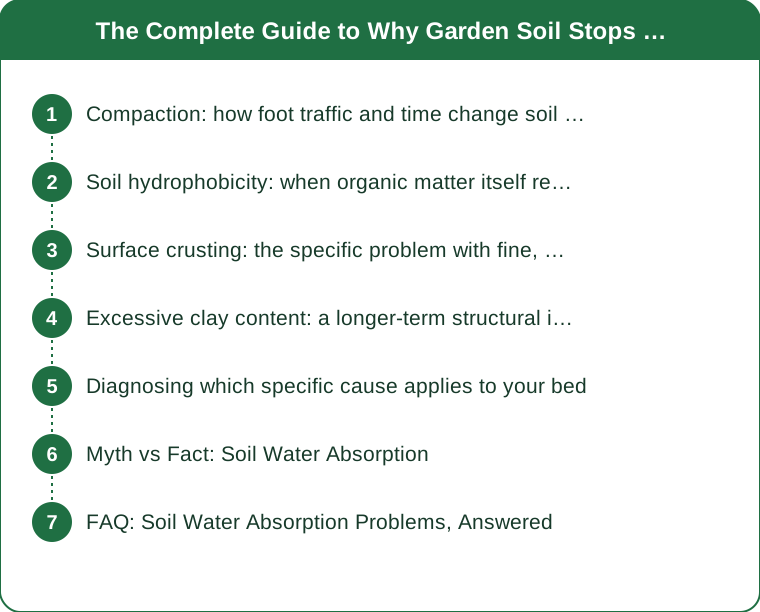
Compaction: how foot traffic and time change soil structure
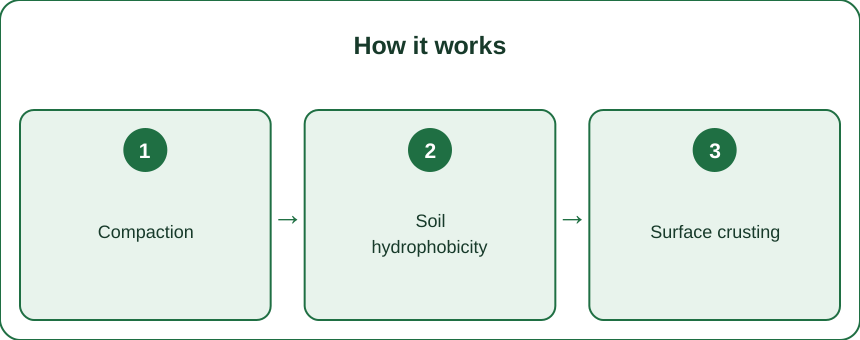
Repeated foot traffic, heavy rain impact, or simply time without amendment gradually compresses soil particles closer together, reducing the pore space water needs to move through. Compacted soil doesn’t just drain slower — the compressed surface layer specifically resists initial water entry, causing the pooling-then-runoff pattern many gardeners notice most on paths and heavily walked bed edges. The fix is mechanical: aerating with a garden fork to a depth of 6-8 inches, breaking up the compacted layer without fully inverting soil structure, ideally followed by a layer of compost worked into the loosened surface to help maintain the improved structure longer term.
Soil hydrophobicity: when organic matter itself repels water
Counterintuitively, very dry organic matter (especially certain types of decomposed plant material and some mulches) can develop a waxy, water-repellent coating on individual particles, a genuine phenomenon called soil hydrophobicity that’s well documented in soil science research, particularly in soils that go through extended dry periods. This is why a bed that used to absorb water fine can develop pooling and runoff after a hot, dry stretch even without any change in soil composition. The fix is a wetting agent (commercially available, or a very dilute dish soap solution as a simple substitute) applied before watering, which breaks the surface tension of the repellent coating and allows water to penetrate on the first application, after which normal absorption often returns for subsequent waterings.
Surface crusting: the specific problem with fine, silty, or clay-heavy soil
Fine-textured soils, particularly those with meaningful silt or clay content, are prone to forming a thin, hard surface crust after heavy rain or overhead watering, as fine particles are jostled loose and then reseal into a denser layer as they dry. This crust can be only a few millimeters thick but is dense enough to significantly slow initial water entry, producing pooling on the surface even though the soil beneath the crust may still have reasonable absorption capacity. The fix is a combination of surface mulch (which reduces the direct raindrop or watering-stream impact that causes crusting in the first place) and periodic light surface cultivation with a hand rake to break up crust before it becomes a chronic, recurring problem.
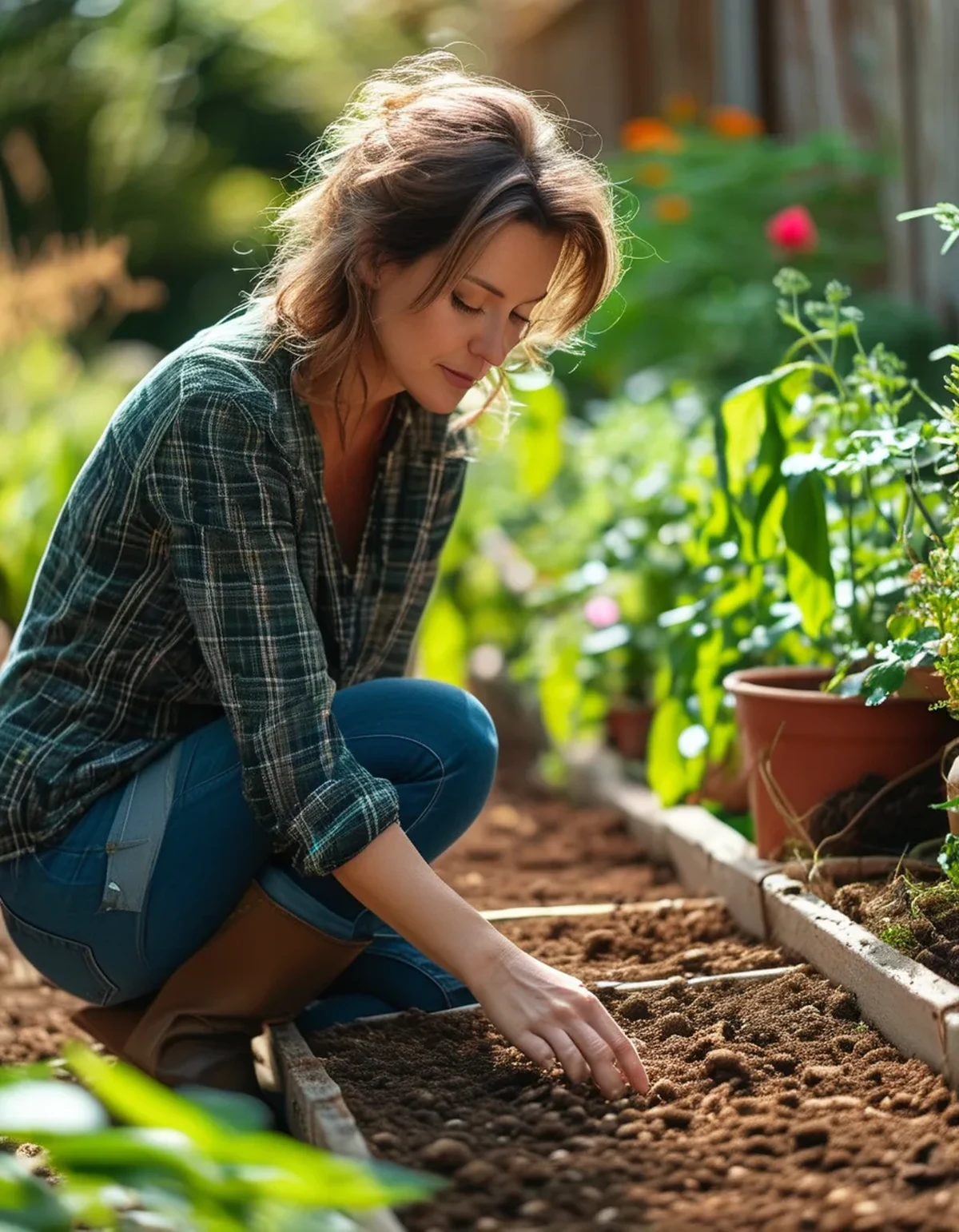
Excessive clay content: a longer-term structural issue
Unlike compaction or crusting, which are surface-level and relatively quick to address, soil that’s inherently very high in clay content has small pore spaces built into its fundamental structure, meaning slow absorption is a persistent characteristic rather than a temporary condition. This requires a longer-term structural fix rather than a one-time treatment: incorporating substantial organic matter (compost, aged manure) over multiple seasons gradually improves clay soil’s structure and pore space, but this is measured in seasons or years of consistent amendment, not a single application, and gardeners with heavy clay soil should set expectations accordingly rather than expecting a quick fix.
Diagnosing which specific cause applies to your bed
A simple field test helps narrow down the cause before choosing a fix: pour a cup of water on the dry soil surface and time how long it takes to fully absorb. Water that beads up or sits without absorbing at all for several minutes points toward hydrophobicity. A visible thin, hard surface layer that water pools on top of, with looser soil clearly visible just beneath once broken, points toward crusting. Soil that feels dense and compressed when you try to push a finger or trowel into it points toward compaction. And soil that’s sticky and moldable when wet, with a smooth rather than gritty texture, points toward high clay content as the underlying structural issue. Most problem beds actually involve some combination of these rather than a single isolated cause, which is why a generic fix often only partially resolves the issue.
Myth vs Fact: Soil Water Absorption
Myth: Adding more water solves poor absorption. Fact: adding more water to already-pooling, non-absorbing soil mostly just increases runoff and waste — addressing the underlying cause is what actually improves absorption.
Myth: All poor-draining soil is a clay problem. Fact: hydrophobicity and crusting can affect any soil type, including sandy soil, and are often temporary conditions rather than the soil’s fundamental composition.
Myth: Compost fixes every soil absorption problem. Fact: compost genuinely helps with compaction and clay structure over time, but does little for surface crusting or hydrophobicity without an accompanying wetting agent or mulch strategy.
FAQ: Soil Water Absorption Problems, Answered
How quickly can a hydrophobic soil condition actually be reversed?
With a wetting agent applied correctly, initial absorption often improves within a single treatment, though maintaining consistent moisture (avoiding repeated full dry-out periods) helps prevent the condition from quickly returning.
Is raised bed gardening a reasonable workaround for chronic heavy clay soil rather than amending it?
Yes — for gardeners with genuinely difficult clay soil, building raised beds with imported, better-structured soil is often more practical than a multi-year clay amendment project, especially for annual vegetable gardens needing reliable drainage sooner.
Does the time of day water is applied affect how well it absorbs?
Not significantly for absorption itself, though watering in early morning generally reduces evaporation loss compared to midday watering, making it a more efficient choice even though it doesn’t directly address any of the four causes above.
TL;DR:
- Compaction, hydrophobicity, surface crusting, and high clay content are the four main causes
- A simple cup-of-water field test helps identify which specific cause applies to your bed
- Compaction and crusting have relatively quick mechanical fixes
- True clay-heavy structural issues require multi-season organic matter amendment, not a one-time fix
- Hydrophobicity specifically needs a wetting agent, not just more water
Pooling water isn’t a mystery — it’s one of four diagnosable conditions, each with its own specific, real fix.
Keep Reading
This article is for general informational and styling purposes only. Fit, sizing, and product availability may vary.