The Complete Guide to Overwintering Herbs in Containers
Quick Answer: Container herbs survive winter based on three decisions made in late summer: which ones are hardy enough to stay outside, whether the pot itself will survive freezing, and whether the ones coming indoors get enough light to justify the move. Rosemary, thyme, sage, oregano, and chives overwinter outdoors in most temperate regions with sharp drainage and wind shelter. Basil and tender perennials must come in or be replaced. The single biggest killer is not cold - it is waterlogged compost freezing around the roots.
Every autumn the same thing happens. The herbs that carried the summer look tired, the nights get colder, and by February half the pots contain nothing but compost.
Almost all of it is preventable, and the work happens now rather than in November.
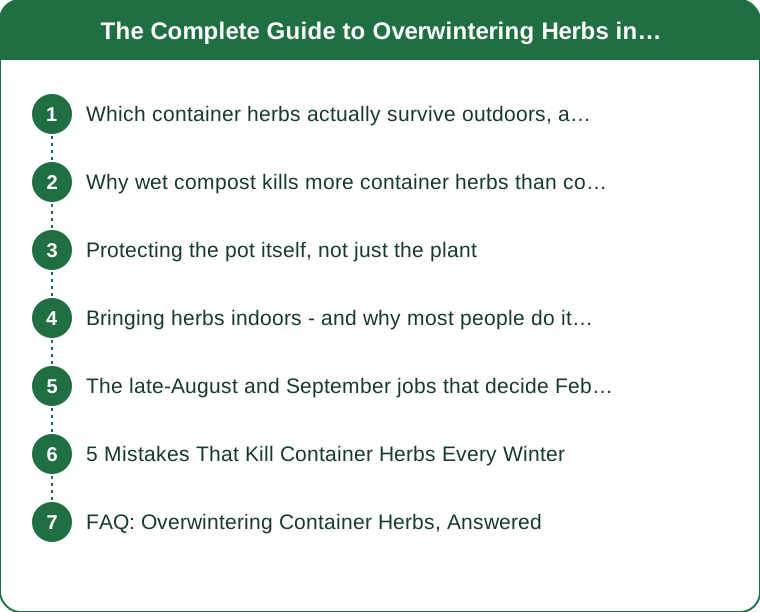
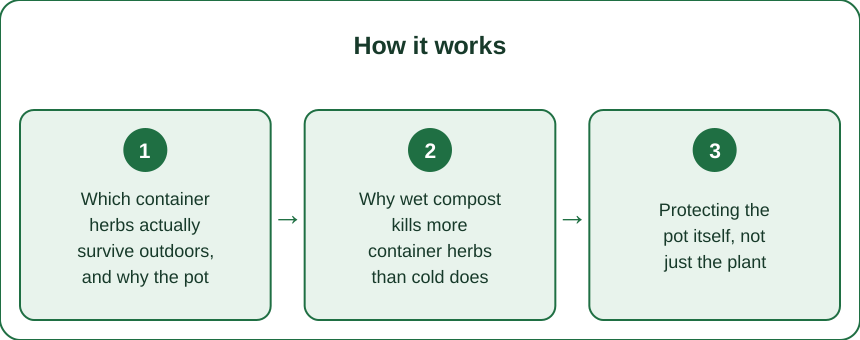
Which container herbs actually survive outdoors, and why the pot changes the answer
Hardiness ratings assume plants are in the ground, and containers are a completely different environment. Soil in a garden bed is insulated by an enormous thermal mass; a 20-centimetre pot has almost none. Roots in a container experience air temperature from several directions at once, which means a plant rated hardy to a given temperature in the ground is effectively two zones less hardy in a pot.
The reliably outdoor-hardy container herbs in most temperate regions are thyme, sage, oregano, marjoram, chives, mint, and winter savory. These are Mediterranean or northern-hemisphere perennials that expect a cold dormant season and will resent being brought into a warm house far more than they resent frost.
Rosemary is the borderline case and the one that causes most disappointment. Many varieties are hardy on paper and still die in pots, almost always from a combination of wet compost and wind rather than from cold itself. A rosemary in a large, sharply drained pot against a south-facing wall usually survives; the same plant in a small pot in an exposed, open position usually does not.
Bay is hardy but foliage-vulnerable. The root system copes; the leaves scorch in cold drying wind and look terrible by March even when the plant is alive.
Tender herbs - basil, lemon verbena, tender tarragon, and most scented pelargoniums - will not overwinter outdoors anywhere that freezes. Basil in particular begins declining below about 10 degrees, well before any frost, which is why it looks miserable in September while everything else is still fine.
Parsley and coriander are biennials rather than perennials, which changes the goal entirely. They survive winter easily and then bolt in spring, so overwintering them is worth doing for early leaves but not as a long-term plan.
The practical sorting exercise takes ten minutes. Group your pots into three: stays out, comes in, gets replaced next spring. Making that decision deliberately in late August rather than reactively during the first frost warning is most of the battle.
Why wet compost kills more container herbs than cold does
The dominant winter killer of Mediterranean herbs in pots is root rot, not freezing. Thyme, sage, rosemary, oregano, and lavender evolved on thin, stony, sharply drained hillsides. Their root systems have no tolerance for sitting in saturated compost for weeks, and a British or northern US winter delivers exactly that.
Winter rainfall arrives when the plant has stopped drinking. In summer a herb in a pot transpires heavily and dries its own compost. In December it is dormant, using almost no water, while rain continues to fall. The compost stays saturated for months.
Saturated compost then freezes as a solid block, which does two things: it physically damages roots as water expands, and it prevents any oxygen reaching them. Roots need oxygen even in dormancy.
The fix is drainage, and it is mostly free. Raise every pot off the ground on pot feet, bricks, or even two lengths of batten. This single change allows water to leave the drainage holes rather than sitting in a puddle against them, and it is the highest-value winter action available.
Check the drainage holes are actually open. After a season of growth, roots and compacted compost frequently block them completely, which turns the pot into a bucket.
Add grit to the compost for Mediterranean herbs when you repot. A third horticultural grit or perlite by volume transforms winter survival for rosemary, thyme, and sage. Ordinary multipurpose compost holds far too much water for these plants in winter.
Move pots out of direct rainfall where you can. Under the eaves of a house, against a wall, or beneath a bench keeps them merely damp rather than saturated, and a rosemary that stays dry at the root will take a hard frost without complaint.
And stop feeding by late summer. Feeding into autumn produces soft new growth that has no time to harden before frost, and soft growth is what dies first.
Protecting the pot itself, not just the plant
Terracotta and ceramic pots crack in winter because water absorbed into the clay freezes and expands. The plant may be perfectly hardy while the container it lives in is destroyed, which is an expensive way to learn this.
Frost-proof and frost-resistant are different claims. Frost-proof pots are fired at high enough temperatures to be effectively non-porous. Frost-resistant means it will probably survive most winters, which is not the same thing at all. If the label does not say frost-proof, assume it is not.
Raising the pot helps here too, because a pot standing in a frozen puddle is being attacked from underneath as well as from within.
Wrapping insulates the roots and buys you real temperature margin. Bubble wrap, hessian, or fleece around the outside of the pot - not over the plant - keeps root temperature several degrees above ambient during a cold snap. Leave the top open so water can still get in and out.
Grouping pots together is the easiest insulation available. A cluster of pots shelters each other and holds warmth far better than the same pots spread around a patio. Put the most vulnerable in the middle.
Move them against a house wall. A wall radiates stored heat overnight and blocks the wind from one direction, and the difference between an exposed corner and a sheltered south-facing wall is larger than most people expect.
Plastic and fibreglass pots survive freezing well but offer even less root insulation than terracotta, so they benefit most from wrapping.
And consider sinking small pots into a garden bed for the winter, pot and all. It uses the ground’s thermal mass without committing to planting out, and it is the single most reliable way to overwinter a small pot of thyme.
Bringing herbs indoors - and why most people do it wrong
The most common mistake is bringing hardy perennials indoors at all. Thyme, sage, oregano, and chives need a cold dormant period. In a warm living room they produce weak, etiolated growth, attract pests, and frequently die - having been killed by kindness rather than frost.
Light is the constraint indoors, not temperature. A windowsill in December provides a small fraction of the light the same plant received in July, and no amount of warmth compensates. This is the reason indoor herbs go leggy and pale.
A south-facing window is the minimum for anything expected to actually grow. East or west-facing will keep a plant alive in a holding pattern; north-facing will not sustain a productive herb through winter.
A cheap grow light changes the outcome completely and is the difference between herbs you can cook with in January and herbs you are watching slowly decline. Twelve to fourteen hours a day on a timer is the usual target.
Inspect ruthlessly before anything comes inside. Aphids, whitefly, and spider mite arrive on plants and then spread to every houseplant you own. Check leaf undersides, rinse the foliage thoroughly, and quarantine new arrivals for two weeks away from other plants.
Bring them in gradually rather than in one move. Two weeks of moving a plant in at night and out during the day reduces the shock, which otherwise shows up as a dramatic leaf drop a fortnight later.
Reduce watering substantially indoors. Central heating dries the air but the plant is growing slowly and using little water, so the usual result is overwatering. Let the top few centimetres dry out before watering again.
And accept that basil is a summer annual. Basil brought indoors in October is an act of hope. Sowing a fresh pot on a warm bright windowsill in February works far better than trying to nurse a tired summer plant through the dark months.
The late-August and September jobs that decide February
Take cuttings now, while there is still warmth and light. Rosemary, sage, thyme, and mint root readily from semi-ripe cuttings taken in late summer. A small pot of rooted cuttings on a windowsill is insurance against losing the parent plant, and it costs nothing.
Do the last significant harvest and preserve it. Herbs stop growing meaningfully once light levels drop, so anything you want from this season should come off now. Freeze soft herbs in oil in ice cube trays; dry the woody ones.
Stop feeding entirely. Any nitrogen going in now produces soft growth that will be damaged by the first hard frost. This is one of the most common autumn mistakes and it is entirely an act of commission.
Trim, but do not hard prune. Tidying and removing dead material improves airflow and reduces fungal problems. Cutting woody herbs back hard in autumn stimulates growth that cannot harden in time - save hard pruning for spring.
Repot anything badly root-bound now rather than in November. A plant with roots circling a pot has no compost left to insulate it and dries or freezes fast. Early autumn repotting gives roots time to establish before dormancy.
Clear fallen leaves and debris off the compost surface. Wet decaying material sitting against the crown of a plant all winter is a reliable route to rot, particularly for sage and thyme.
Decide the sorting now: out, in, or replace. Writing it down takes five minutes and removes the panicked November evening where everything gets dragged into a dark utility room.
And group the pots before the weather turns rather than after. Moving heavy wet pots in December is unpleasant, and it is a job that gets postponed exactly when it matters most.
5 Mistakes That Kill Container Herbs Every Winter
Mistake 1: Bringing hardy perennials into a warm house. Thyme, sage, oregano, and chives need cold dormancy. Indoors they go weak and leggy, pick up pests, and frequently die - and the gardener concludes they were not hardy after all.
Mistake 2: Leaving pots standing directly on paving. Drainage holes sitting in a puddle is the root cause of most winter losses. Pot feet or two bricks solve it for nothing, and this is the highest-value action on the whole list.
Mistake 3: Using ordinary multipurpose compost for Mediterranean herbs. It holds far too much water in winter. A third grit or perlite by volume changes rosemary and thyme survival dramatically.
Mistake 4: Feeding into autumn. Late nitrogen produces soft growth that has no time to harden. The plant then loses that growth to the first frost and enters winter weakened rather than dormant.
Mistake 5: Wrapping the foliage instead of the pot. Fleece over the top of a plant traps moisture against the leaves and encourages rot, while the roots - which are the vulnerable part in a container - stay unprotected. Wrap the pot, and only fleece the foliage during an exceptional cold snap.
The one that surprises experienced gardeners is the first. Bringing herbs in feels like care, and for hardy perennials it is the single most reliable way to lose them.
FAQ: Overwintering Container Herbs, Answered
Which herbs can stay outside in pots over winter?
Thyme, sage, oregano, marjoram, chives, mint, and winter savory reliably overwinter outdoors in most temperate regions. Rosemary and bay usually manage with sharp drainage and wind shelter. Basil, lemon verbena, and tender tarragon will not.
Why do my potted herbs die in winter even though they are hardy?
Almost always waterlogged compost rather than cold. Hardiness ratings assume plants are in the ground, where soil provides insulation and drainage. A pot is effectively two zones less hardy, and saturated compost that freezes solid kills roots outright.
Should I bring my herbs indoors?
Only the tender ones. Hardy perennials need a cold dormant period and decline in a warm room. If you do bring herbs in, a south-facing window is the minimum and a grow light makes the difference between usable herbs and slow decline.
How do I stop my terracotta pots cracking?
Check the pot is frost-proof rather than frost-resistant, raise it off the ground so it is not standing in a frozen puddle, and wrap the outside with bubble wrap or hessian leaving the top open.
When should I stop feeding and pruning?
Stop feeding by late summer, and avoid hard pruning of woody herbs in autumn. Both stimulate soft new growth that cannot harden before frost. Light tidying for airflow is fine; save real pruning for spring.
What is the single most useful thing I can do this week?
Raise every pot off the ground and check the drainage holes are clear. It costs nothing, takes twenty minutes, and prevents the most common cause of winter loss.
TL;DR:
- Container herbs are effectively two hardiness zones less hardy than the same plant in the ground - the pot, not the plant, is the vulnerable part.
- Waterlogged compost freezing around the roots kills far more herbs than cold does; raise every pot off the ground and clear the drainage holes.
- Add a third grit or perlite for rosemary, thyme, sage, and oregano, and shelter them from direct winter rainfall.
- Do not bring hardy perennials indoors - they need cold dormancy and decline in a warm room. Only tender herbs come in, and only with real light.
- Wrap the pot rather than the foliage, group pots together against a wall, and check that terracotta is frost-proof rather than frost-resistant.
- Take cuttings, do the final harvest, stop feeding, and sort your pots into out, in, or replace - all in the next few weeks.
Everything that determines what your herb pots look like in February is decided in the next month, not during the first frost warning.
Keep Reading
This article is for general informational and styling purposes only. Fit, sizing, and product availability may vary.