The Complete Guide to Planning Your Fall Vegetable Garden Now
Quick Answer: Most fall vegetables — leafy greens, root crops, and brassicas — need to go in the ground 8-12 weeks before your area’s first frost date, which for most of the US means planting begins in the final weeks of summer, not once fall officially arrives.
A lot of gardeners think of fall as wind-down season, but it’s actually one of the most productive windows of the year if you plant at the right time.
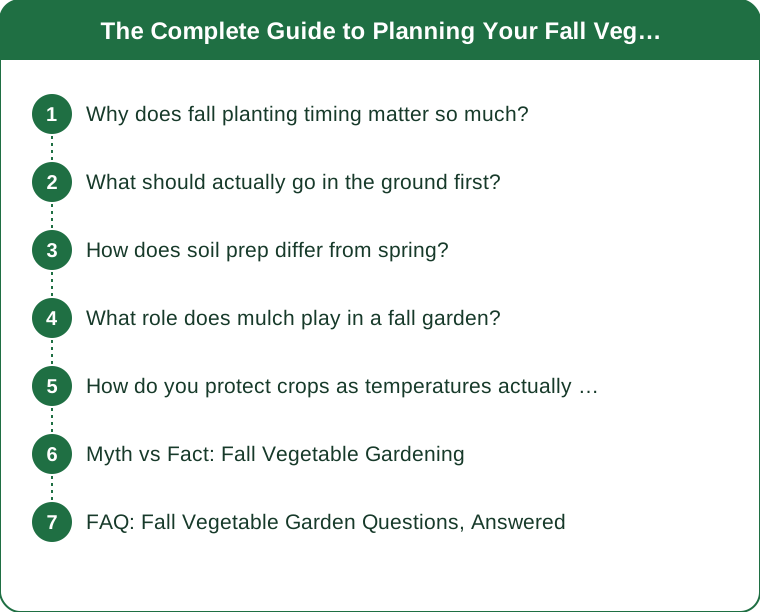
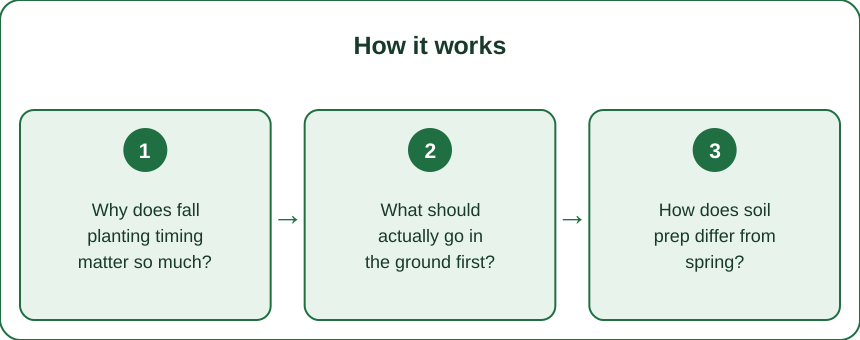
Why does fall planting timing matter so much?
Unlike spring planting, where you’re racing toward warmer weather, fall planting is a race against the cold, and every week of delay shrinks the harvest window before frost stops growth entirely. Counting backward from your first frost date, rather than forward from today’s date, is the more reliable planning method.
Most extension offices publish average frost dates by zip code, and that single number should anchor every planting decision you make for the next two months.
What should actually go in the ground first?
Root vegetables and slow brassicas go first — carrots, beets, and broccoli need the longest runway, often 70-90 days to maturity. These should be direct-sown or transplanted within the next one to two weeks in most temperate regions.
Fast-growing greens like spinach, arugula, and lettuce can wait another few weeks since they mature in as little as 30-45 days, giving you more flexibility in the planting calendar without sacrificing harvest.
How does soil prep differ from spring?
Summer soil is often depleted from a full growing season, so working in compost before fall planting matters more than it does in spring, when soil has had a full winter to rest and rebuild naturally.
A thin layer of compost worked into the top few inches, followed by a light water-in, gives fall crops the nutrient boost they need without the heavy amendment schedule spring beds typically require.
What role does mulch play in a fall garden?
Mulch does double duty in fall: it retains soil moisture during the tail end of summer heat, and later insulates roots as temperatures drop toward frost. Straw or shredded leaves both work well and break down into the soil over winter, improving structure for next spring.
Apply mulch after seedlings are a few inches tall rather than immediately at planting, since a thick layer over tiny seedlings can smother them before they establish.
How do you protect crops as temperatures actually drop?
Row covers or cold frames extend the harvest window by several weeks past the first light frost, since most fall crops (kale, carrots, brussels sprouts) actually improve in flavor after a light frost rather than being damaged by it.
A simple hoop-and-fabric row cover, held a few inches above the plants, traps enough heat to protect against frost down to the high 20s (F) for most cool-season crops.
Myth vs Fact: Fall Vegetable Gardening
Myth: Fall gardens don’t produce as much as spring gardens. Fact: cooler temperatures actually reduce pest pressure and bolt risk for leafy greens, meaning fall harvests are often more consistent, not smaller, than spring ones for the same crops.
Myth: You should wait until it actually feels like fall to plant. Fact: by the time it feels like fall, most crops have already missed their ideal planting window — the calendar, not the temperature outside today, should drive the decision.
Myth: Frost ends the harvest. Fact: a light frost improves the sweetness of many fall vegetables (kale, carrots, brussels sprouts) by converting stored starches to sugars as a natural cold-defense response in the plant.
FAQ: Fall Vegetable Garden Questions, Answered
Can you succession plant in fall the way you do in spring?
To a limited extent — fast crops like radishes and lettuce can be succession sown every 1-2 weeks until roughly 6 weeks before frost, after which there’s not enough runway left to mature.
Do fall crops need less watering than summer ones?
Generally yes, since cooler temperatures reduce evaporation, but newly seeded beds still need consistent moisture for germination even as the weather cools.
Is it worth starting fall crops from seed indoors?
For slower brassicas like broccoli and cabbage, starting seeds indoors 4-6 weeks before your outdoor planting date gives them a head start that matters when the fall growing window is already tight.
TL;DR:
- Count backward from your first frost date, not forward from today, to time fall planting
- Root vegetables and brassicas go in first; fast greens can wait a few extra weeks
- Work compost into the top few inches of soil before planting
- Row covers can extend your harvest weeks past the first light frost
Pull up your zip code’s average first frost date this week — it’s the single number that should drive every fall planting decision from here.
Keep Reading
This article is for general informational and styling purposes only. Fit, sizing, and product availability may vary.