7 Fall Vegetable Garden Mistakes That Quietly Waste an Entire Growing Season
Quick Answer: The most common fall garden mistake is planting too late relative to each crop’s days-to-maturity and the local first-frost date — count backward from frost, not forward from today, to know what’s still plantable.
August gardens often look deceptively full. By the time frost hits in October, plants that never had time to mature sit half-grown in beds that could have produced a real second harvest. The mistakes below are why.
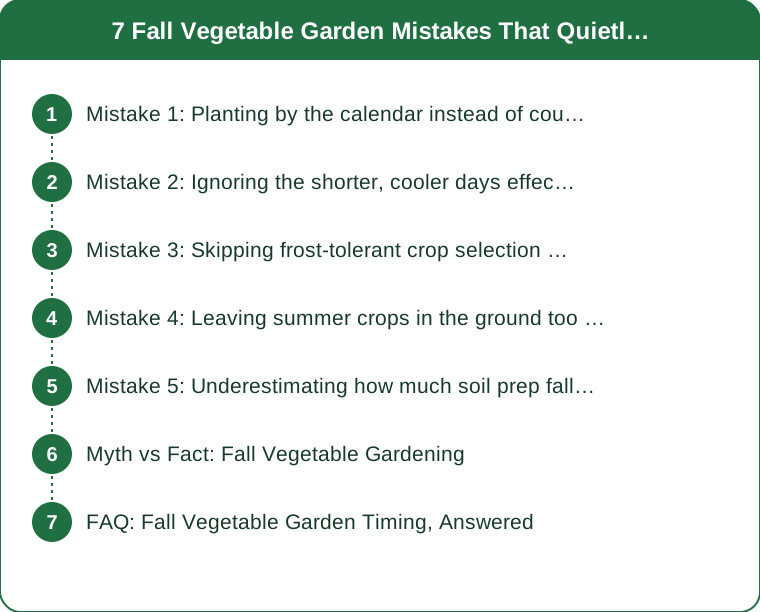
Mistake 1: Planting by the calendar instead of counting backward from frost
Every seed packet lists days to maturity. The only number that matters in fall is: does that number of days fit between today and the local first-frost date? A 90-day squash planted in late August in a zone with a mid-October frost simply won’t finish, no matter how well it’s tended.
Mistake 2: Ignoring the shorter, cooler days effect on growth speed
Days-to-maturity numbers on seed packets are calculated for peak-season growing conditions — full sun length and warm soil. As daylight shortens in fall, growth slows measurably, so it’s safer to add 2 weeks of buffer to the packet’s stated maturity time for anything planted after Labor Day.
Mistake 3: Skipping frost-tolerant crop selection entirely
Not every plant needs to race the frost. Kale, spinach, carrots, and Brussels sprouts actually improve in flavor after a light frost, since cold triggers the plant to convert starches to sugars. Choosing frost-tolerant crops for the latest plantings removes the deadline pressure altogether.
Mistake 4: Leaving summer crops in the ground too long out of habit
Tomato and pepper plants that have stopped producing still occupy bed space and nutrients that fall crops need. Pulling spent summer plants by early September in most zones frees up the sunniest real estate for crops that will actually mature before frost.
Mistake 5: Underestimating how much soil prep fall planting still needs
Fall beds that have grown a full summer crop are often depleted. Skipping a light compost top-dress before fall planting because ‘it’s just for a short season’ is a common shortcut that results in stunted, slow-maturing plants exactly when time is already tight.
Myth vs Fact: Fall Vegetable Gardening
Myth: Fall gardening is only for advanced gardeners. Fact: Many fall crops (radishes, lettuce, spinach) are easier than summer crops since pest pressure and heat stress both drop.
Myth: A frost ends the fall garden immediately. Fact: A light frost only damages tender crops; hardy greens and root vegetables often continue producing for weeks afterward.
Myth: Fall planting requires completely different soil than summer. Fact: The same beds work fine — they usually just need a nutrient refresh after a full summer of production.
FAQ: Fall Vegetable Garden Timing, Answered
What’s the single easiest fall crop for a first-time fall gardener?
Radishes — many varieties mature in under 30 days, tolerate cool soil well, and give fast, confidence-building results.
Can I start fall crops from seed directly outdoors, or do they need starting indoors?
Most fast-maturing fall greens and roots direct-sow fine; only slower crops like broccoli benefit from an indoor head start in mid-summer.
Is it too late to plant a fall garden if it’s already early September?
Often no — many regions still have 6-8 frost-free weeks left in early September, enough time for quick greens and radishes even if larger crops are off the table.
TL;DR:
- Count backward from the local first-frost date, not forward from today’s date
- Add roughly 2 weeks of buffer to packet maturity times for anything planted after Labor Day
- Choose frost-tolerant crops like kale and carrots for the latest plantings
- Pull spent summer crops early and refresh soil with compost before fall planting
A fall garden that actually produces comes down to math, not luck — count the days before you plant, not after.
Keep Reading
This article is for general informational and styling purposes only. Fit, sizing, and product availability may vary.