Fall Garden Cleanup: What to Cut Back and What to Leave Standing
Quick Answer: Cut back anything that was diseased, anything that harbors overwintering pests, and anything that turns to mush and smothers the crown. Leave standing anything with sturdy hollow stems, seed heads that feed birds, and evergreen or semi-evergreen basal growth. The general rule: remove the sick and the soggy, leave the structural and the seedy.
The blanket “cut everything down” approach was never about plant health. It was about tidiness, and it costs you beneficial insects, bird food and a layer of winter insulation you would otherwise have to buy as mulch.

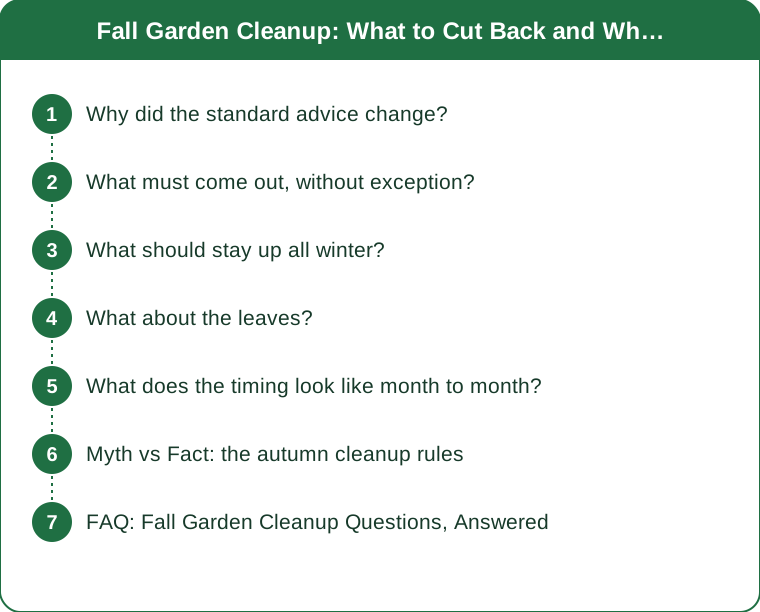
Why did the standard advice change?
Because the reasons for cutting everything back turned out to apply to a much smaller set of plants than the rule implied.
The traditional autumn cleanup — everything to two inches, beds raked bare, all debris hauled away — came from ornamental horticulture where appearance in the dormant season was a primary goal, and from a period when pest management leaned heavily on removing all possible habitat.
What has shifted is the recognition of what that habitat actually contains. A large share of native bee species are stem-nesting or ground-nesting, and stem-nesting species overwinter inside hollow or pithy plant stems. Cutting and removing every stem in October removes that population from your garden entirely, and they do not simply relocate — they were already inside.
The second shift is soil. Bare, raked soil over winter loses structure to freeze-thaw cycles, sheds nutrients in runoff and warms and cools faster than covered soil. Standing plant material and fallen leaves function as an insulating layer that moderates soil temperature swings, which matters for shallow-rooted perennials in particular.
The third is simply observation: gardeners who stopped cutting everything back reported the same or lower disease pressure the following season, provided they still removed genuinely diseased material. The disease argument for total cleanup was real but narrow — it applies to specific pathogens on specific plants, not to healthy foliage as a category.
None of this means cleanup is obsolete. It means cleanup became a set of decisions rather than a single chore, and the decisions are not hard once you know what you are looking at.
What must come out, without exception?
Three categories, and being disciplined about these is what makes the leave-it-standing approach safe.
Anything with visible disease. Powdery mildew on phlox, bee balm or squash. Black spot on roses. Leaf spot on peonies. Blight on tomatoes. Rust on hollyhocks. These pathogens overwinter on plant debris and on fallen leaves directly beneath the plant, and they re-infect from below in spring via rain splash. Remove the foliage and rake the leaf litter under that specific plant. Do not compost it in a passive home pile — most home piles do not reach or hold the temperatures needed to reliably kill these pathogens.
Anything that hosts an overwintering pest you actually have. Iris borer overwinters as eggs in old iris foliage, so cutting iris leaves back hard in autumn is one of the more effective non-chemical controls available. Squash vine borer and squash bug both overwinter in and around old vine debris. If you had a specific pest this year, look up where it overwinters and remove that specific habitat rather than clearing the whole bed.
Anything that collapses into a wet mat. Hosta, daylily, and most large-leaved herbaceous perennials turn to slime after the first hard frost. That mat sits directly on the crown, holds moisture against it all winter, and creates ideal conditions for crown rot and a slug population explosion. It also provides no structural or habitat value, because there is no stem left to nest in. Cut these once they have gone soft.
The vegetable garden is a separate case. Annual vegetable debris carries disease at much higher rates than ornamental perennials, and there is no habitat argument for leaving spent tomato vines standing. Clear the vegetable beds thoroughly.
What should stay up all winter?
The plants where standing material does real work — and there are more of them than most people expect.
Hollow and pithy stems. Bee balm, joe-pye weed, coneflower, black-eyed susan, sunflowers, raspberry canes, elderberry, and most tall composites. These are where stem-nesting bees and beneficial wasps overwinter. If you want to be maximally useful, cut these in spring to a staggered 8 to 24 inches rather than to the ground — the resulting stubble is prime nesting habitat for the following season, and new growth hides it within weeks.
Seed heads that feed birds. Coneflower, rudbeckia, sunflower, sedum, liatris, aster, goldenrod, ornamental grasses, and anything in the sunflower family. Goldfinches work coneflower heads all winter. Removing them in October removes a food source at precisely the point in the year when it is scarcest.
Ornamental grasses. These earn their keep three ways: winter structure, seed, and the insulating crown protection provided by their own dead foliage. Cutting grasses back in autumn also exposes the crown to freeze-thaw and standing water, which is a common cause of mysterious grass die-off. Leave them until early spring, then cut to a few inches before new growth starts.
Evergreen and semi-evergreen basal foliage. Heuchera, hellebore, dianthus, epimedium, some sedums, and many hardy ferns keep functional leaves through winter. Cutting these back removes living tissue and the plant’s own insulation. Tidy the genuinely dead outer leaves in spring and leave the rest alone.
Marginally hardy plants of any kind. For anything at the edge of your zone, the dead top growth is free insulation. Cut it in spring.

What about the leaves?
This is where the biggest gains are available and where most gardeners still do the least useful thing.
Leaves on lawn: shred them with a mower and leave them in place, or rake them into beds. Whole leaves matted on turf do smother grass, but shredded leaves break down into the soil and multiple turf studies have found no negative effect on lawn quality from mulch-mowing a normal leaf load. Bagging and hauling away leaves exports the year’s accumulated organic matter and nutrients from your property, and then people buy compost in spring.
Leaves in beds: this is where they belong. A two to three inch layer of leaves over perennial beds insulates soil, suppresses spring weeds, feeds soil biology, and is where a large number of butterfly and moth species overwinter as pupae or eggs. It is the single cheapest soil amendment available and it arrives on its own.
Where not to leave them: directly piled against the crowns of plants prone to rot, on top of low evergreen groundcovers, in gutters and drains, and — as noted — under any plant that had a fungal disease this year.
Leaf mold is worth making deliberately. A wire bin of leaves, left alone for a year, produces one of the better soil conditioners you can get, with a water-holding capacity substantially higher than the soil it goes into. It requires no turning, no ratio management and no attention. It is the least demanding thing in the garden.
The tidiness compromise. If bare-bed aesthetics matter in the front garden, do the selective approach in the back and the traditional approach in front. Habitat value is not all-or-nothing, and a garden that keeps half its stems standing keeps most of the benefit.
What does the timing look like month to month?
The when matters as much as the what, and the common error is doing everything on the same weekend.
Early autumn, before frost. Clear vegetable beds as crops finish, especially anything with disease. Remove diseased ornamental foliage while you can still identify it — after frost, healthy and diseased tissue look alike. Divide and plant spring-blooming perennials. Plant bulbs. Do not cut back healthy perennials yet; many are still moving carbohydrate down into their roots, and leaves that look tired are often still working.
After the first hard frost. Now cut the collapsers — hosta, daylily, brunnera. Cut iris hard if borer is a concern. Empty and store ceramic pots before they freeze and crack. Drain and store hoses. Leave the structural plants and seed heads alone.
Late autumn, after the ground begins to cool. Apply mulch and leaf cover now rather than earlier. Mulching too early keeps soil warm and can encourage a late flush of growth that will not harden off. The goal is to keep frozen soil frozen, not to keep warm soil warm.
Winter. Nothing. This is the point.
Early spring, when daytime temperatures are consistently above about 10 degrees Celsius for a stretch. Now cut the standing stems, and stagger the heights. Waiting matters — cutting on the first warm day in February releases overwintering insects into a landscape with nothing flowering and no shelter. A week or two of patience meaningfully improves survival, and the garden loses nothing by waiting.
Myth vs Fact: the autumn cleanup rules
Myth: Leaving debris causes disease.
Fact: Leaving diseased debris causes disease. Healthy plant material does not spontaneously generate pathogens, and the fungal problems most gardeners face are plant-specific and identifiable. This is why the selective approach works — you are removing the actual inoculum rather than everything.
Myth: Slugs overwinter in leaf litter, so litter means more slugs.
Fact: Slugs overwinter in soil, under stones and in crowns regardless of what you do with leaves. What genuinely increases slug pressure is a wet mat of collapsed soft foliage sitting directly on plant crowns — which is exactly the material the selective approach tells you to remove.
Myth: A garden left standing looks neglected.
Fact: It looks like a winter garden. Grasses catching low light, seed heads holding frost, structure where there would otherwise be bare soil. What reads as neglect is usually a half-done job — collapsed mush left alongside standing stems. Doing the removal part properly is what makes the leaving part look intentional.
Myth: You should cut everything back in spring instead, all at once.
Fact: Staggering spring cutting is better for the same reasons staggering autumn cutting is. Cut the earliest-emerging plants first and work through over several weeks, which spreads the disturbance and gives overwintering insects time to emerge.
FAQ: Fall Garden Cleanup Questions, Answered
Will leaving stems standing make my garden look messy to neighbors?
The signal that reads as “intentional” is edges. Crisp bed lines, a mown strip, and a clear path do more for perceived tidiness than what happens inside the bed. A garden with defined edges and standing grasses reads as designed; the same plants with blurred edges read as abandoned.
What if I have limited time and can only do one thing?
Remove diseased material and clear the vegetable beds. That captures most of the disease-prevention benefit of a full cleanup. Everything else can wait until spring with no penalty and some gain.
Do I need to cut back before mulching?
No. Mulch goes around standing stems perfectly well. The mulch layer is protecting soil and crowns, and the stems are doing something separate.
TL;DR:
- Remove the sick and the soggy: diseased foliage, known pest habitat, and anything that collapses into a wet mat on the crown.
- Leave the structural and the seedy: hollow stems, seed heads, ornamental grasses, evergreen basal foliage.
- Shred leaves onto the lawn and rake the rest into beds — do not export them.
- Mulch late, once soil has cooled, and cut standing stems in spring at staggered heights rather than to the ground.
- Clear vegetable beds thoroughly; they are the exception where debris genuinely carries disease.
Autumn cleanup stopped being one chore and became a short list of decisions. Once you know which plants are on which list, the whole job gets faster and the garden gets better.
Keep Reading
This article is for general informational and styling purposes only. Fit, sizing, and product availability may vary.